Direct answer
What is Byword?
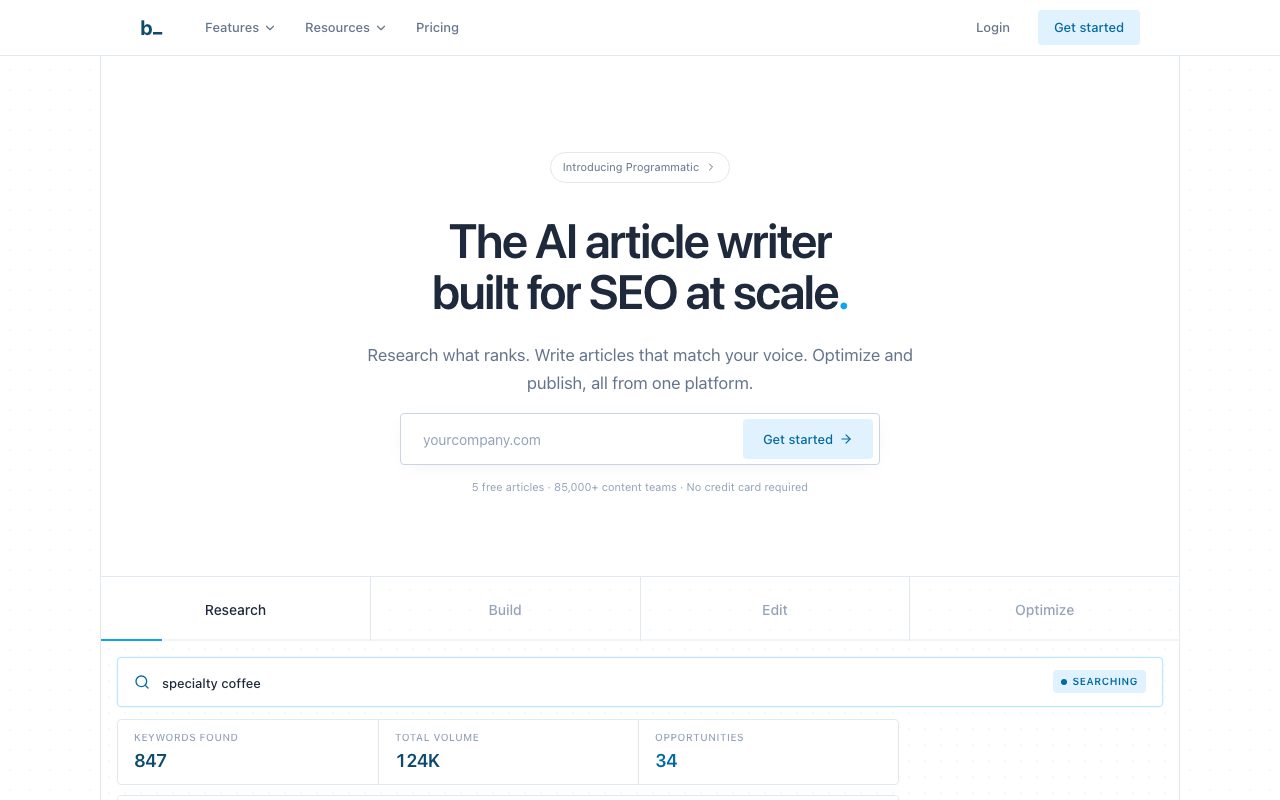
Byword is an AI-powered SEO writing platform that pairs keyword research, multi-model generation, brand voice calibration, and live SEO grading with direct CMS publishing.
Byword is designed to eliminate the fragmented workflow between keyword research, outline drafting, AI copywriting, and CMS publication. Rather than requiring users to switch between separate SERP analyzers and generic chat interfaces, the platform connects data-driven topic discovery with automated article generation and instant publishing. The system incorporates an internal keyword research engine that evaluates difficulty, volume trends, competitive search intent, and topical clusters across an index of 2.4 billion keywords. Content production draws on multiple underlying frontier models (such as GPT-5.4, Claude Opus 4.6, and Gemini 3.1 Pro), allowing users to leverage specific models or let Byword select the best engine for the content type. Supported formats include how-to articles, product reviews, listicles, long-form guides, and news breakdowns. To address common complaints about sterile AI copy, Byword lets teams upload sample blog posts, documentation, and style guides to calibrate its voice-matching engine. The platform automatically extracts tone, sentence cadence, and company terminology to reflect brand guidelines. Before exporting, drafts pass through an optimization layer that assesses 147 technical and semantic ranking factors, scoring readability, keyword distribution, and heading structures in real time. Completed posts can be deployed directly to publishing platforms including WordPress, Webflow, Shopify, Ghost, HubSpot, and Medium via native integrations, webhooks, or API.
Unlike generic AI chat tools or isolated content graders, Byword blends proprietary keyword intelligence, multi-model selection (GPT, Claude, Gemini), style-guide learning, and automated one-click publishing to six major CMS platforms into a single continuous pipeline.
Product capabilities
Key features
Research Intelligence
Analyzes SERP patterns, intent, search volumes, and competitor gaps across 2.4 billion indexed keywords to surface high-opportunity topics.
Voice Matching Engine
Learns terminology, cadence, and tone from uploaded style guides, company docs, or sample articles to avoid generic phrasing.
Multi-Model Intelligence
Directs generation through frontier models like GPT-5.4, Claude Opus 4.6, and Gemini 3.1 Pro, choosing optimal models automatically or by user preference.
Live SEO Scoring
Monitors 147 on-page ranking factors with sub-three-second updates, providing color-coded letter grades and real-time recommendations for readability and keyword placement.
Batch and Programmatic Generation
Allows queues ranging from 10 to 10,000 articles generated in parallel with custom templates and structured metadata.
Direct CMS Publishing
Pushes finished articles complete with headings, schema markup, and metadata directly to platforms such as WordPress, Webflow, Shopify, Ghost, and HubSpot.
Workflow
How Byword works
- Enter a target domain or keyword topic to initiate automated SERP and competitor gap research.
- Upload writing samples or style documentation to calibrate Byword's voice-matching model.
- Select article structure and model preferences, then generate full drafts with schema and metadata.
- Review live SEO grading feedback covering 147 ranking factors and apply real-time recommendations.
- Export or automatically publish completed articles to connected CMS platforms via API or webhooks.
Practical fit
Who should use Byword?
Scaling Agency Content Operations
SEO agencies generate dozens of client-ready articles each month, routing them through specific domain templates and custom tone profiles.
Programmatic Niche Publishing
Webmasters deploy structured review, comparison, and how-to guides at scale across niche affiliate sites using parallel batch generation.
Closing Competitive Content Gaps
Marketing teams discover underserved keyword clusters on competitor SERPs and immediately generate optimized counter-articles.
Editorial assessment
Pros and limitations
Where it is strong
- Supports 5 free trial articles without requiring credit card registration
- Native one-click publishing to WordPress, Webflow, Shopify, Ghost, HubSpot, and Medium
- Access to multi-model AI engines including GPT-5.4, Claude Opus 4.6, and Gemini 3.1 Pro
- Built-in SERP analysis and real-time 147-factor SEO scoring eliminates separate grading tools
Where to be careful
- Starter plan is restricted to single users and capped at 5 connected domains
- High volume generation still requires editorial review to ensure nuanced factual precision
Commercial context
Byword pricing
Pricing snapshot at review date (September 2026). Byword offers 5 free articles without a credit card. Paid subscriptions start at $99/month for 25 articles with overage pricing per article. Annual billing offers a 17% discount. Readers should verify current tiers on the official pricing page.
| Plan | Price | What it includes |
|---|---|---|
| Starter | $99 / month | |
| Standard | $299 / month | |
| Scale | $999 / month |
Pricing, limits, taxes, model access, and regional availability can change. Verify the purchase-critical details on the official pricing page linked under Sources.
Transparent ranking
Why Byword scores 75.7
Each factor is scored on a 100-point scale, then combined using the public ToolsRank weights. Engagement and momentum stay at a neutral baseline until measured signals exist, so no tool can gain or lose position from numbers nobody recorded.
Compatibility
Languages, platforms, and integrations
Languages
- English
Platforms
- Web
Integrations & surfaces
- WordPress
- Webflow
- Shopify
- Ghost
- HubSpot
- Medium
- GoHighLevel
- Notion
- Google Docs
- Airtable
- Google Sheets
- Slack
Community
Reviews and questions
No approved member reviews yet. Editorial factors above are the only rating on this page.
Reviews and questions come from Google-signed members and are checked by an editor before they appear.
Frequently asked
Byword FAQ
How does Byword differ from using general chat assistants like ChatGPT?+
Byword eliminates the need to prompt AI from scratch each session. It retains uploaded brand voice guidelines, automatically queries SERP data and competitor intent, formats articles with schema markup, and publishes directly to CMS platforms without manual copy-pasting.
Who owns the rights to articles generated on Byword?+
Users retain 100% ownership of all content generated through the platform. Byword does not claim rights to generated material, and user content is not shared or repurposed.
How fast does Byword generate an article?+
Standard articles are typically generated in 60 to 90 seconds. Research-intensive pieces involving competitor SERP analysis and citations take between two and three minutes, with parallel generation available for large queues.
Which CMS platforms can Byword publish to automatically?+
The platform supports direct publishing to WordPress, Webflow, Shopify, Ghost, HubSpot, Medium, and GoHighLevel, with additional export support for Google Docs, Markdown, HTML, webhooks, and custom API connections.