
Direct answer
What is Voiceflow?
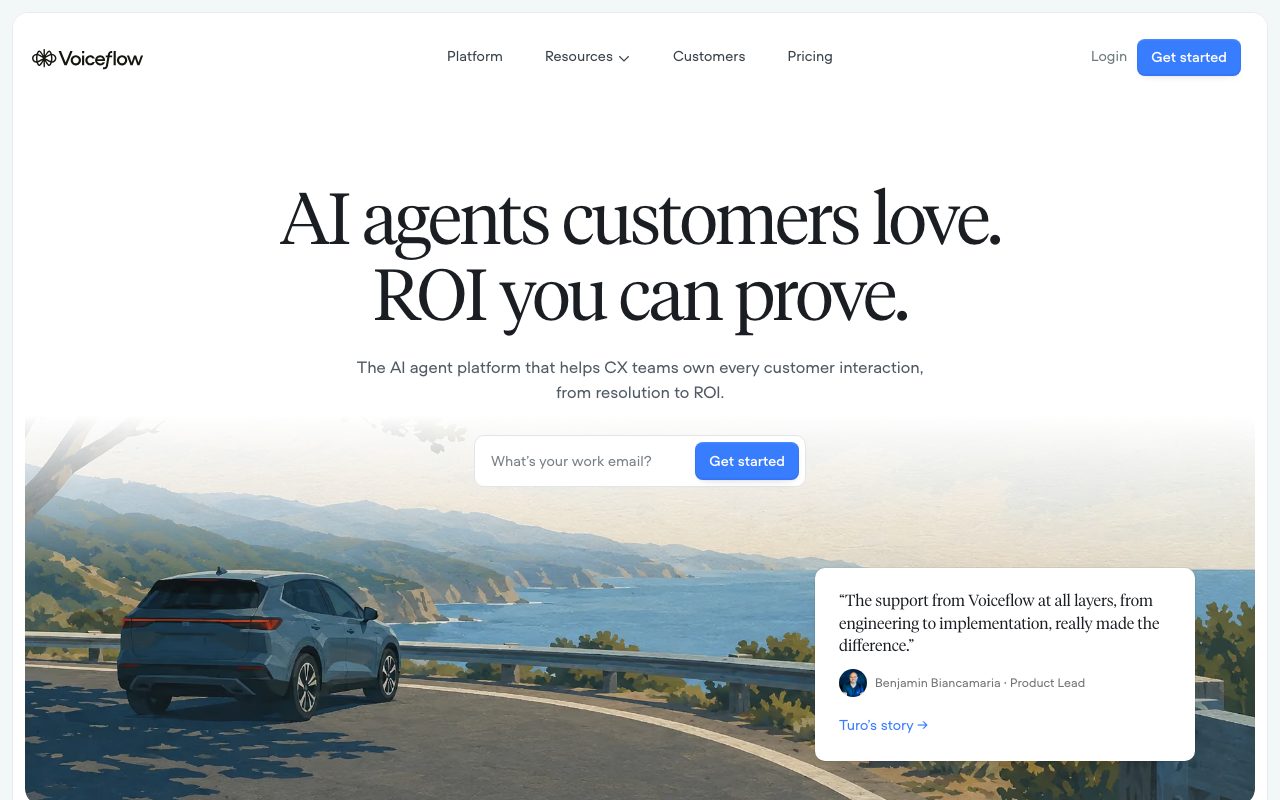
Voiceflow lets teams design agent conversations visually, ground them in a knowledge base, connect APIs, and deploy to web chat, voice, and custom channels.
Voiceflow combines a canvas for conversation design with a knowledge base for grounded answers, function and API steps for actions, and analytics for deployed agents. It suits teams that want designers and developers working together and that need an agent to take actions beyond answering questions.
A collaborative visual canvas for conversation design paired with knowledge grounding and API actions, giving non-developers control while keeping developers in the loop.
Product capabilities
Key features
Conversation canvas
Design intents, flows, and fallbacks visually with versioning and comments.
Knowledge base
Ground answers in uploaded documents and URLs with retrieval settings.
API actions
Call external systems mid-conversation to look up or update records.
Deployment and analytics
Publish to web chat, voice, or custom channels and review transcripts.
Practical fit
Who should use Voiceflow?
Support agent with actions
Answer questions and update tickets or orders via API steps.
Prototype to production
Design and test flows with stakeholders before engineering handoff.
Agency delivery
Build agents for clients with reusable templates.
Editorial assessment
Pros and limitations
Where it is strong
- Excellent collaborative design experience
- Grounding plus actions in one place
- Free tier for prototyping
- Good documentation
Where to be careful
- AI credits add variable cost
- Complex agents still need engineering
- Channel coverage depends on plan
Commercial context
Voiceflow pricing
A free tier supports building and testing; Pro, Business, and Enterprise plans add higher limits, collaboration, and deployment features with usage-based AI credits at the review date. Confirm current terms on the official pricing page.
Pricing, limits, taxes, model access, and regional availability can change. Verify the purchase-critical details on the official pricing page linked under Sources.
Transparent ranking
Why Voiceflow scores 78.8
Each factor is scored on a 100-point scale, then combined using the public ToolsRank weights. Engagement and momentum stay at a neutral baseline until measured signals exist, so no tool can gain or lose position from numbers nobody recorded.
Compatibility
Languages, platforms, and integrations
Languages
- Multilingual conversations depending on model
Platforms
- Web
- Web chat widget
- API
- Voice channels
Integrations & surfaces
- REST APIs
- Web chat
- Twilio
- Zendesk
- Intercom
- Zapier
Community
Reviews and questions
No approved member reviews yet. Editorial factors above are the only rating on this page.
Reviews and questions come from Google-signed members and are checked by an editor before they appear.
Frequently asked
Voiceflow FAQ
What is Voiceflow best for?+
Voiceflow is best for teams that design agent conversations collaboratively and need knowledge grounding plus API actions in one platform.
Is Voiceflow free?+
A free tier allows building and testing; paid plans add limits, collaboration, and deployment features with usage-based credits at the review date. Check the official pricing page.
How does ToolsRank score Voiceflow?+
ToolsRank combines editorial quality, practical utility, trust and transparency, freshness, engagement quality, and momentum. Paid placement never changes the organic score.


