Direct answer
What is LangGraph?
LangGraph is an open-source, MIT-licensed agent orchestration framework by LangChain that gives developers low-level control over state, memory, cyclical execution, and human-in-the-loop moderation.
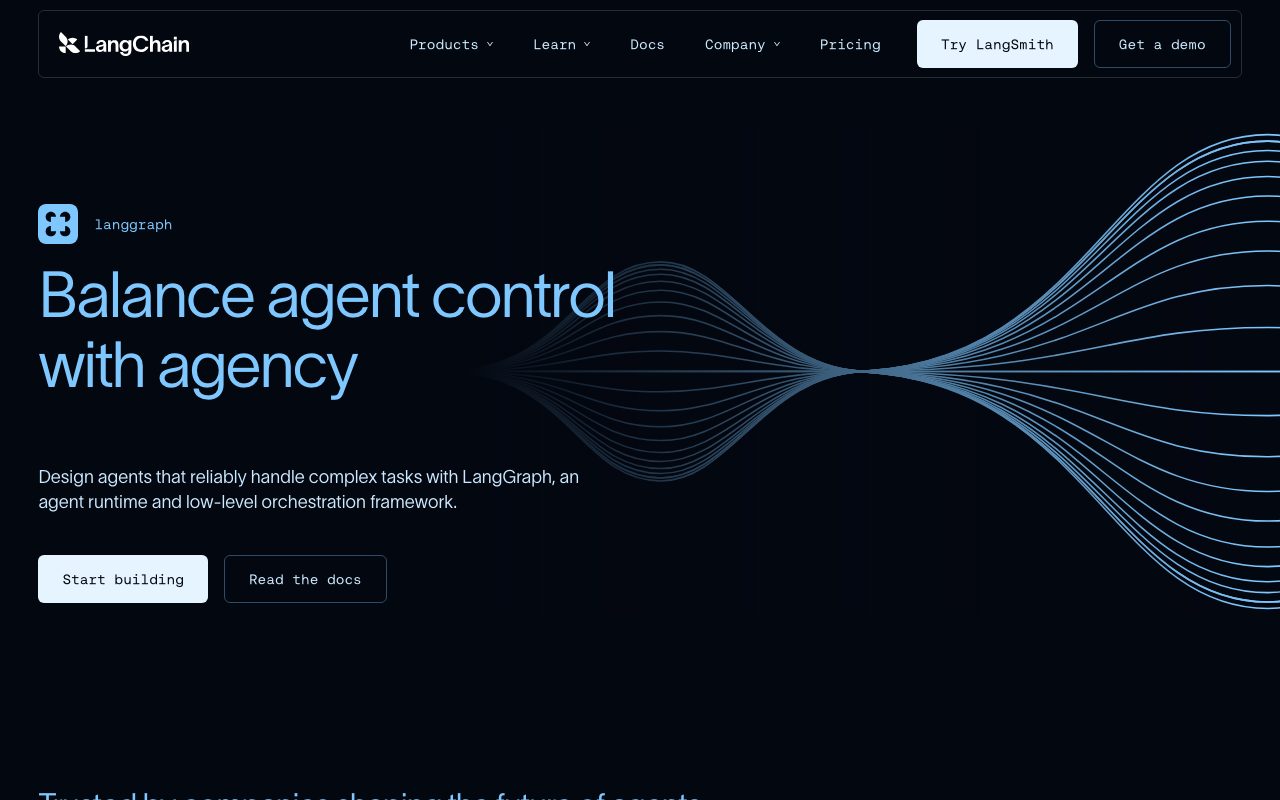
LangGraph is an agent runtime and orchestration framework created by LangChain to build production-grade, multi-actor AI applications. Unlike high-level autonomous agent frameworks that operate as opaque loops, LangGraph provides low-level primitives to design explicit control flows, including single-agent, hierarchical, and multi-agent coordination. The framework centres on stateful graph architectures where transitions, cyclical decisions, and node execution can be inspected and regulated. It natively supports human-in-the-loop controls, allowing developers to pause execution to inspect state, inject input, steer reasoning, or gate high-stakes actions behind explicit approvals. It also provides built-in persistence layers to manage conversation histories and state across sessions. For user interfaces, LangGraph includes native token-by-token streaming of agent reasoning steps and intermediate actions alongside final model responses. While the core library is open-source and model-agnostic, teams requiring cloud deployment, trace debugging, and automated evaluations can integrate it with LangSmith.
Unlike generic black-box autonomous loops, LangGraph models agent workflows as explicit stateful graphs with fine-grained control over cyclical transitions, state persistence, and human-in-the-loop interruptions.
Product capabilities
Key features
Low-level Graph Orchestration
Construct single-agent, multi-agent, and hierarchical systems with fine-grained control flows using graph-based primitives.
Human-in-the-Loop Controls
Pause, inspect, and approve agent actions with built-in moderation patterns to keep autonomous workflows aligned.
Stateful Memory Persistence
Persist context and conversation history across sessions to enable contextual, multi-turn interactions over time.
Native Streaming
Stream intermediary thoughts, tool executions, and final outputs token-by-token to support responsive user interfaces.
Model-Agnostic Design
Connect and coordinate agent workflows using any model provider without vendor lock-in.
Zero Overhead Architecture
Designed to operate without adding performance latency to application execution code.
Practical fit
Who should use LangGraph?
Multi-Actor Agent Workflows
Coordinate specialised sub-agents that collaborate, hand off context, and complete structured enterprise tasks.
Regulated Decision Making
Require human verification and sign-off before an agent calls external APIs or modifies sensitive data.
Long-Running Conversational Assistants
Maintain stateful interaction threads and memory across disjointed user sessions.
Editorial assessment
Pros and limitations
Where it is strong
- Open-source and MIT-licensed with no licensing cost for the core framework
- Provides fine-grained state machine control rather than rigid black-box agent loops
- Native token-by-token streaming for both intermediate actions and final outputs
- Seamless optional observability and evaluation integration with LangSmith
Where to be careful
- Requires substantial Python or JavaScript engineering expertise, lacking a standalone no-code canvas
- Managed cloud hosting and observability via LangSmith require separate paid tiers after base free allowances
Commercial context
LangGraph pricing
At the review date, the LangGraph orchestration library is open source under an MIT license and free to use. Optional hosted infrastructure, tracing, and managed deployment through LangSmith offer a free Developer tier (1 seat, 5,000 monthly traces) and a paid Plus tier at $39 per seat per month plus compute and storage usage.
Pricing, limits, taxes, model access, and regional availability can change. Verify the purchase-critical details on the official pricing page linked under Sources.
Transparent ranking
Why LangGraph scores 77.4
Each factor is scored on a 100-point scale, then combined using the public ToolsRank weights. Engagement and momentum stay at a neutral baseline until measured signals exist, so no tool can gain or lose position from numbers nobody recorded.
Compatibility
Languages, platforms, and integrations
Languages
- English
Platforms
- Self-hosted
- Cloud
Integrations & surfaces
- LangSmith
- LangChain
Community
Reviews and questions
No approved member reviews yet. Editorial factors above are the only rating on this page.
Reviews and questions come from Google-signed members and are checked by an editor before they appear.
Frequently asked
LangGraph FAQ
Is LangGraph open source and free to use?+
Yes. LangGraph is an open-source library distributed under the permissive MIT license and is free to download and use in self-hosted or commercial applications.
How is LangGraph different from other agent frameworks?+
According to the vendor, many agent frameworks rely on black-box cognitive architectures suited only for simple, generic tasks. LangGraph provides low-level primitives that let developers define custom state graphs, control flows, and human-in-the-loop interventions tailored to bespoke enterprise requirements.
Does LangGraph add performance overhead to applications?+
The vendor states that LangGraph is designed to introduce no overhead to application code and is engineered specifically to support streaming workflows.
Do I need to pay for LangSmith to use LangGraph?+
No. The LangGraph library can be run independently on your own infrastructure. LangSmith is an optional, separate agent engineering platform for tracing, evals, and managed deployment that offers both free developer allotments and paid usage tiers.